De toekomst is nog niet gebeurd en daarom des te maakbaarder. Daarom gaan wij samen met Stad in de Maak nadenken over de samenleving waaraan zij willen werken en de toekomst die zij zouden willen realiseren. Met wij bedoel ik Christian Fruneaux en Edwin Gardner, en onze futurologie studio, Monnik.
Futurologie klinkt misschien wat geheimzinnig en mysterieus. Alsof we met Monnik de toekomst zouden kennen, of dat die te voorspellen is. Maar helaas (of vooral gelukkig) bestaat de toekomst nog niet. Het is dan ook onmogelijk haar te meten, te proeven of te onderzoeken. Futurologie gaat dan ook vooral over de vraag hoe jij of je organisatie zich positioneert in het heden. Wat wil je? Waar kies je voor? Waar zeg je nee tegen, en waar wil je weerstand tegen bieden? Of wat wil je juist stimuleren, en plannen voor maken? Lees verder “Wereld in de Maak – Monnik”
Deze aflevering bevat verschillende artikelen over het project ‘Pioniersmeent De Stokerij’ in het kader van The Art of Impact. Daarnaast stukken over commoning en over wonen.
Naast de wassalon Wasbuur is er aan de straat ook een microbrouwerij gevestigd. De Browery is het kleinste, pop-up, micro-brouwerijtje van Rotterdam. In de ruimte kunnen vrienden en buurtbewoners zelf een biertje brouwen. De brouwerij is bedacht en opgericht door Niels Buwalda in samenwerking met Stad in de Maak. Niels vertelt hoe het allemaal is begonnen en hoe hij de toekomst van zijn micro-brouwerij ziet. Lees verder “Browery, Samen bierbrouwen”
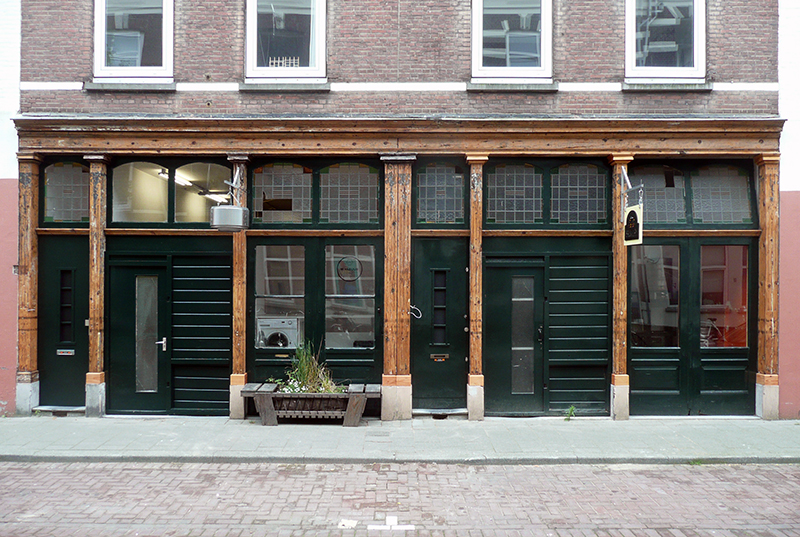
In 1899 werden aan de Pieter de Raadtstraat nummers 35 en 37 twee identieke panden gebouwd. Op de begane grond vestigde zich in 1902 een bedrijf in ‘zeep en zout’. Al snel daarna komt er een waterstokerij bij. Ooit had zowat elke straat zo’n voorziening waar je voor een paar centen een emmer warm water kon ophalen. De historie van de plek leeft onder meer voort in de naam Stokerij, maar ook in de activiteiten die er plaats vinden. Een aantal van die activiteiten heeft direct met de geschiedenis van ‘wassen en schoonmaken’ te maken. Lees verder “Wasbuur: Van samen wassen naar duurzaam zeep maken”
Hoe kan leegstaand, veelal dichtgetimmerd vastgoed worden geactiveerd en geschikt gemaakt voor betaalbare woon- en werkruimte en met de stad gedeelde “meenten” (commons)? Hoe kan een dergelijke woon-werkeenheid economische zelfstandigheid opbouwen? Welke economische modellen zijn voorhanden om dergelijk vastgoed in de toekomst ‘uit de markt te halen’ en tegen speculatie te beschermen?
Deze onderwerpen stonden op woensdag 22 juni centraal op een bijeenkomst in de voormalige waterstokerij aan de Pieter de Raadtstraat. Een korte inleiding in het hoe-en-waarom van Stad in de Maak (zie ook de pdf) brengt de bijeengekomen groep al snel tot de kern van de uitdaging waarvoor we ons momenteel gesteld staan. Tot nog toe heeft Stad in de Maak voor haar activiteiten tijdelijk beschikking weten te krijgen over panden die onder de huidige omstandigheden voor de eigenaar economisch “onhandelbaar” zijn geworden. Niet alleen is dit door de tijdelijkheid op de lange termijn geen duurzame oplossing, maar bovendien leidt het tot de paradoxale situatie dat ons initiatief om betaalbare woon- en werkruimte te realiseren in Rotterdam alleen in tijden van economische crisis gerealiseerd kan worden en bij stijgende vastgoedprijzen onhoudbaar wordt. De grote uitdaging voor Stad in de Maak (en anderen die vastgoed uit de spiraal van “wooncarrières” en speculatie willen halen) is het duurzaam ter beschikking krijgen van vastgoed. Praktisch gesproken komt dit neer op het door aankoop uit de markt te halen en aan een groep gebruikers ter beschikking te stellen. Lees verder “Economische modellen voor leegstand- en zelfbeheer”
Op 18 juni 2016 aanstaande, de Dag van de Architectuur, houdt Stad in de Maak een Open Dag.
Maak het mee! Kom langs op Pieter de Raadtstraat 35-37!
De Open Dag is onderdeel van het Rotterdamse bezichtigingsprogramma van de Dag van de Architectuur. In het hoofdkwartier van Stad in de Maak aan de Pieter de Raadstraat zijn alle ruimten te bezichtigen en worden er activiteiten georganiseerd. De overige panden kunnen bezocht worden tijdens een speciale fietstocht om 15.00 uur.
In de afgelopen jaren is er door ontwerpers en kunstenaars een belangrijke bijdrage geleverd aan ‘wicked social problems’, onder meer rond thema’s als ‘meenten’ (commons), alternatieve economie, en sociale, ecologische en economische weerbaarheid en zelfwerkzaamheid in het algemeen.
De urgentie om met pionierswerk een ander stedelijk toekomst-perspectief in de dagelijkse praktijk van de stad te testen, heeft twee jaar geleden tot de start van Stad in de Maak geleid.
Van september 2016 tot voorjaar 2017 zullen de Stad in de Maak ‘commons’ op de begane grond mede worden gebruikt voor het project Pioniersmeent De Stokerij. Een groep kunstenaars wordt gevraagd om door middel van artistieke en/of sociale en/of economische interventies met ons mee te experimenteren. Lees verder “In aankomst: Pioniersmeent De Stokerij”
Over the past few years of creating affordable living- and workspace in the city, we have come a long way from the very few initiatives we had found acting in this field, to the current pool of citizens that are about to (or in de midst of!) taking part of the cities’ space into collective use. And like us, most of them have found that it is urgent to take this effort beyond the often temporary access we have been able to achieve till now. How can we secure permanent access and control over the spaces so vital to our lives?
Fellow city makers at the Stoking House
On 28th of May, an international group of city makers came together at the Stoking House of City in the Making, to discuss the current state of affairs. It is interesting to see new urban communities arising from these efforts, and observe how they build a new future on the often disregarded, outlived or scrapped resources that are available in the city. But in the increasingly market dominated sphere in which even citizens’ initiatives find themselves acting, this often means that we have to take ourselves to that same market of real-estate to buy up the remains we aim to give a new, collective future. For most of us, that means a tough puzzle of mobilising enough capital to “save” the buildings for our cause.
Hence, we have extended discussing that challenge during the rest of the day in the context of the Re:Kreators network (aka fellow city makers) which is currently forming in Europe. One of the challenges is to match the acquisition of real estate (buying it in order to bring it into common, anti-speculative ownership) with the mission of keeping spaces affordable.
Of course, the exchange of experiences and expertise among the initiatives is already proving crucial and inspiring when facing this challenge. But we could take it a step further: by forming networks that can set up a revolving investment fund together, so that at least the seed funding necessary to make a start can be quickly mobilised. It is an idea quickly gaining traction in several of the discussions we have been feeding into: from the upcoming Re:Kreators to the VrijCoop (the Dutch branch of the Mietshäuser Syndikat) currently set up. A crucial bit of urban economy being re-invented?
The last Fridays of September and October the ground floors of Pieter de Raadtstraat 35-37 hosted the breakfast meetings of CreativeMornings Rotterdam. We were just a node in an international network of breakfast plus lecture meetings for creatives that take place at the same time in cities all over the world.
Roy and Ni nan’s Food Mountain (photo Nina Tulp)
Breakfast by Roy and Ni Nan (photo Nina Tulp)
Sam and Ideas (photo Nina Tulp)
The first meeting on Friday 25 September was themed Empathy. After a glorious Chinese breakfast prepared by Ni Nan and Roy (on mirror tables reused from an intervention by Petra Blaise in Huis Zonneveld), the lecture by Sam Nemeth and Ideas (nickname of Syrian refugee Mohamed) really touched a nerve (and our hearts). Especially because of the influx of refugees in Europe and the growing controversy about this in our country.
Sam and Ideas talked about their meeting on Lesbos where Ideas had landed after deserting from the Syrian army and living for a while at his grandma’s place before taking the Turkey Route to Europe. From the moment they met they stared a social media conversation which was published on the website Ideas Odyssey.
Ideas is now safe in the Netherlands with a permit to stay. After the lecture Sam mentioned that Ideas/Mohamed was still looking for a house. We are happy to announce that now a month later he is going to live in one of our houses.
Tom Six @ City in the Making
After this empathic Friday with a nice ending, next meeting on Friday 30 October was a sort of a Shock. Well that was that month’s theme, so we were warned. After another beautiful breakfast (with a shocking culinary ending) by Ni Nan accompanied by an acoustic set by Princeton, director Tom Six talked about his trilogy The Human Centipede, the most controversial of all schock-horror movies. For those who are not acquainted with his work, let’s just say that it’s all about connecting people. Tom was very open about his goals and ambitions, basically to become famous by doing something shocking and controversial. And it must be said he accomplished this goal fully and went to the limit to achieve it. Most of the audience seemed to take it by their strides (some left) and the discussion afterwards was ehh … lively.
Some video with an impression of the things going on last Friday, featuring Princeton
Thanks to the people of CreativeMornings Rotterdam (and Guido who invited them). It was a joy to have you all and good luck at the next place.
On June 15, within City in the Making (Stad in de Maak) initiative in Rotterdam, STEALTH.unlimited are organising half-a-day seminar, moving between the floors of our building at Pieter de Raadtstraat. A group of about 20 participants (from Stockholm, Paris, Netherlands) will come together to reflect on our ongoing endeavour from the perspective of how and on which premises to common the city, in the context of the unravelling welfare state and re-emergent struggles for urban existence. The event is one of the final stages of STEALTH’s practice base PhD research at the Royal Institute of Art in Stockholm, titled Practices of the Essential In-between, which in parallel to urban commons and alternative economic models discusses role of spatial practices in these processes.
From 2014, City in the Making is engaged in bringing a fraction of the stalled public housing stock (back) to forms of common use, set in three apartment buildings right at the Central Station in Rotterdam, for a period of ten years. Although in itself a modest attempt, knowing that hundreds of apartments and workspaces in the city are lingering in the same status (as a result of disruptive governmental policies, but foremost due to mismanagement and speculative risk-taking of its current real-estate owners), the intent is to take it as a starting point to open up paths to the much larger potential of re-commoning these urban resources to collective benefit.
To provoke thoughts in this direction, we have asked input from Martijn Jeroen van der Linden (researcher at TU Delft / Economics of Innovation and Technology, who’s PhD thesis focuses on the purposes of money and capital, and aims to propose a new design for the monetary system), Aetzel Griffioen (political philosopher, co-ordinator of Skillcity Rotterdam, who researches new forms of collective prosperity and works on socio-ecologic education in neighbourhoods of Rotterdam-South) and Saskia van Stein (curator, director Bureau Europa Maastricht).
Limited number of places available, contact us for more info.